
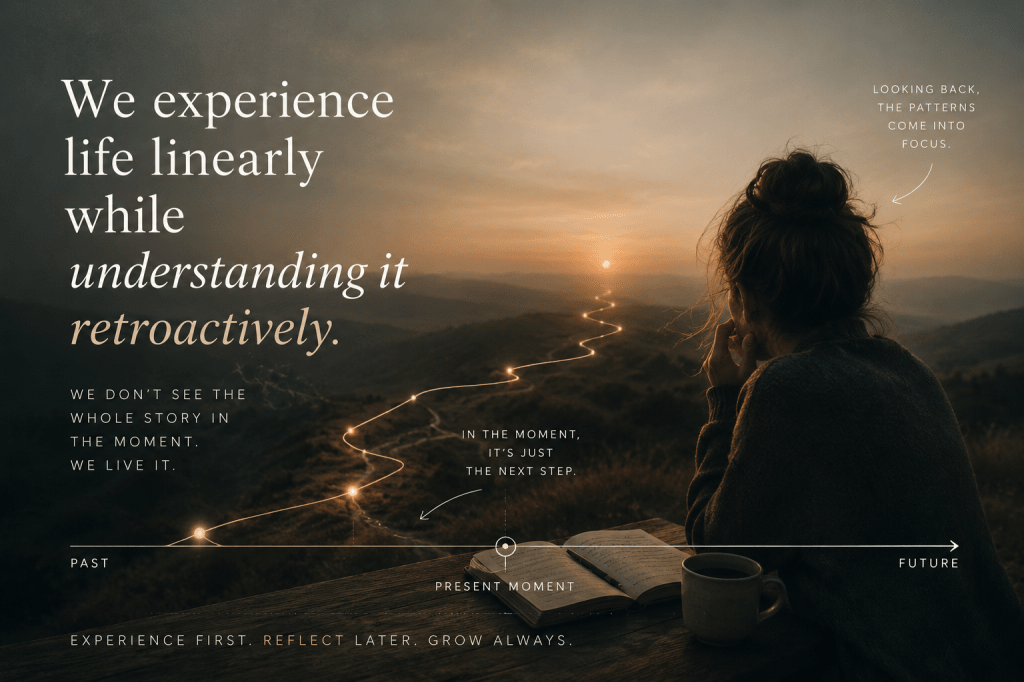
I think one of the strangest parts of being human is that we experience life linearly while understanding it retroactively.
No, seriously, when you sit down and truly think about it, every single second of our lives are forged almost completely blind with nothing but past experiences to guide us.
When you work on self-growth, you’ll often hear that new experiences are scary no matter if they’re good or bad because they are new and our brains only know what we’ve survived through before. It’s why someone might go back to a bad situation whether it’s a relationship, living situation, or job, just because they’re familiar with it already.
There’s a reason sayings like:
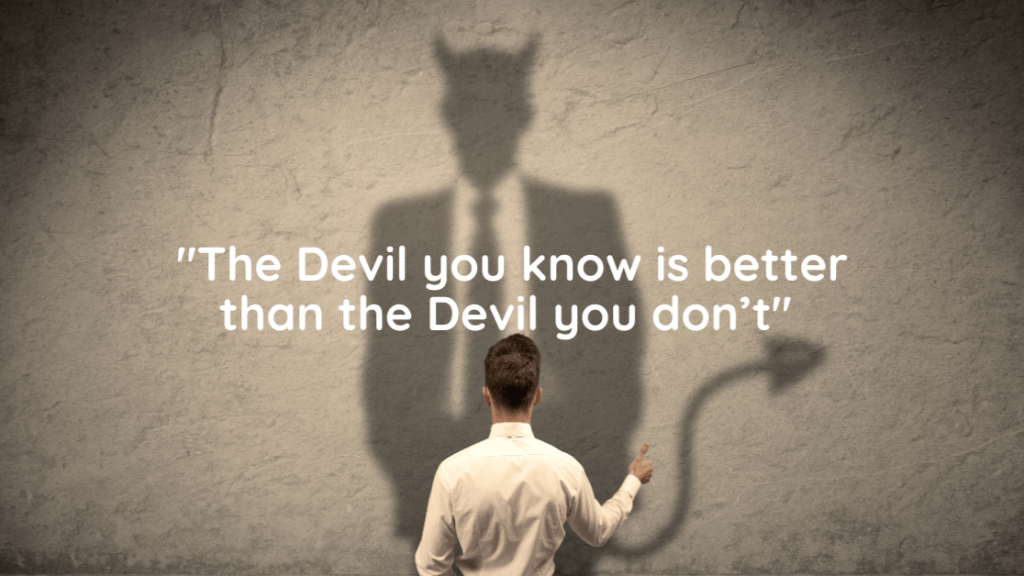
“Better to deal with the devil you know than to deal with the devil you don’t.”
have survived for generations. Otherwise put, it’s typically thought wiser/better to deal with a situation you already have experienced and therefore know what to expect than to jump in blind to a possibly worse situation.
But that kind of forces us into a box, doesn’t it? If we only ever experience life through the lens and structure of situations we’ve dealt with before, how would we ever improve ourselves or our situations? Better yet, how would we ever experience anything new at all?
Bravery is when you act with strength in spite of being afraid. It’s when you’re afraid of what could be in the water but choose to jump in anyway. It takes bravery to explore new things, experiences, and ways of living. Sometimes it turns out objectively bad, but most of the time things go much better than you expected.
Since everything new is unknown to us, the possibilities of what could be in that unknown are endless and therefore filled with monsters until we go out of our way to experience something new.
Which takes me to part two of the above statement:
“-while understanding it retroactively”
Once you’ve made the leap to change careers, leave the relationship, or to move cities, you’re then tasked with a very different job. That job being to incorporate the data you now have from these experiences into the framework of your own understanding of the world in order to expand your capacity and knowledge for future experiences. Now, things that once terrified you become things you know you can survive because they belong in your lived experience instead of in your imagination.
Another famous saying is,
“Hindsight is 20/20”
This saying means that we only see a situation completely clearly once it’s over and we have collected all the data about it that applied to us. Now, we start looking back on it and noticing where we could have improved or maybe where we were grateful we might have made different decisions than we usually would have otherwise and things turned out better than expected.
But in order to incorporate this data, it requires reflection which requires pause or rest so we can truly digest information and place it into the proper categories in our mind.
In a society that insists productivity is the only measure, rest is just as important if not even more than action. Rest is the time that you expand your framework of possibilities and world view and knowledge. It’s when you add important distinctions into your everyday lens that allows you to move forward wiser and better prepared for a wider array of situations. R & R actually stands for Rest and Reflect.
But what is it to truly rest and reflect?
We can rule doomscrolling on social media right out, or really anything that provides constant noise. We can also rule out any overly harsh criticism that may actually be the voices of others from our past instead of our own. It is not berating ourselves for not being productive, either. When you take time to rest and reflect, it means allowing yourself the breathing room to truly relax, to truly unwind, and allow your mind to defrag.
Neuroscience has found that our minds require at least 20 minutes of defrag time a day, otherwise, being bored. Sitting and staring out a window, staring at the grass, watching paint dry, anything that does not require heavy brain processing to complete. It’s a different kind of rest and different kind of brainwave than we get when we are asleep, and it allows us time to subconsciously filter our daily experiences in addition to when we are unconscious.
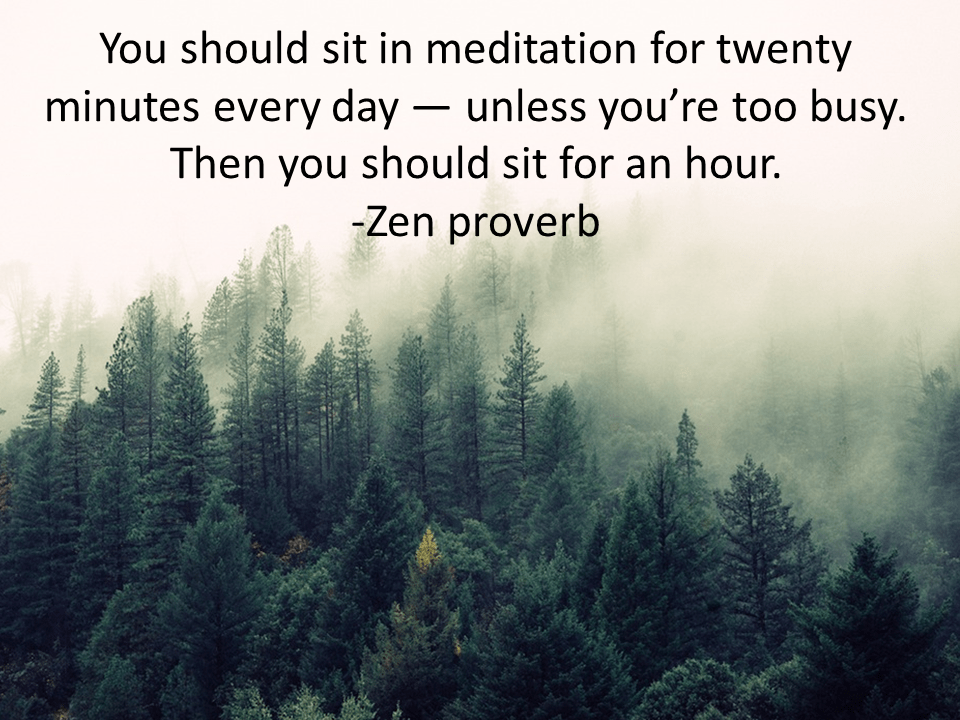
“You should sit in meditation for 20 minutes every day — unless you’re too busy. Then you should sit for an hour.”
Life is too precious to give it all away to anxiety, stress, worry, and other people’s agenda. Sure, we live in a society where it’s normal to sell your time for money so you can pay for important things like a house. But you only get one life and ultimately you are the most important thing in your own life. Don’t let someone or something else steal your spotlight. It’s your show!
Remember, we experience life linearly while understanding it retroactively. This give a natural cadence of bursts of activity then periods to rest and reflect. We can’t see the future, so we forge ahead blind with only the memories of what we’ve experience before to guide us. The more new we experience, the wider our framework and lens and the larger perspective and knowledge we have to help us continue to forge forward. This is what true wisdom is and how we gain it.
You are allowed to fail. You are allowed to flounder. You are allowed to be new at something.
Don’t let the fear of a new experience hold you back from living or else you’ll never break out of your current limitations. The unknown will always contain monsters until you walk into it long enough for them to become memories instead.
– E. Lexi Abbott


Leave a Reply